

Campaign Implementation: Turning Strategy Into Action
Campaign Implementation: Turning Strategy into Results for Delhi Businesses
Having a brilliant digital marketing strategy on paper is only half the battle. The real difference between businesses that grow and businesses that stagnate lies in execution — how well that strategy is actually implemented, monitored, and optimized in the real world. At Nikhil Marketing Hub, we’ve seen countless well-planned strategies fail simply because campaign implementation was rushed or poorly managed.
This article walks through what proper campaign implementation looks like, with practical insights for businesses operating in the competitive Delhi market.
What Is Campaign Implementation?
Campaign implementation is the process of taking your digital marketing strategy and putting it into action — setting up accounts, configuring targeting, writing creative, launching campaigns, and continuously monitoring performance. It’s where planning meets execution, and where small details often decide whether a campaign succeeds or wastes budget.
A strategy might say “improve visibility through SEO and paid search.” Implementation is what actually gets your pages ranking and your ads running in front of the right Delhi audience.
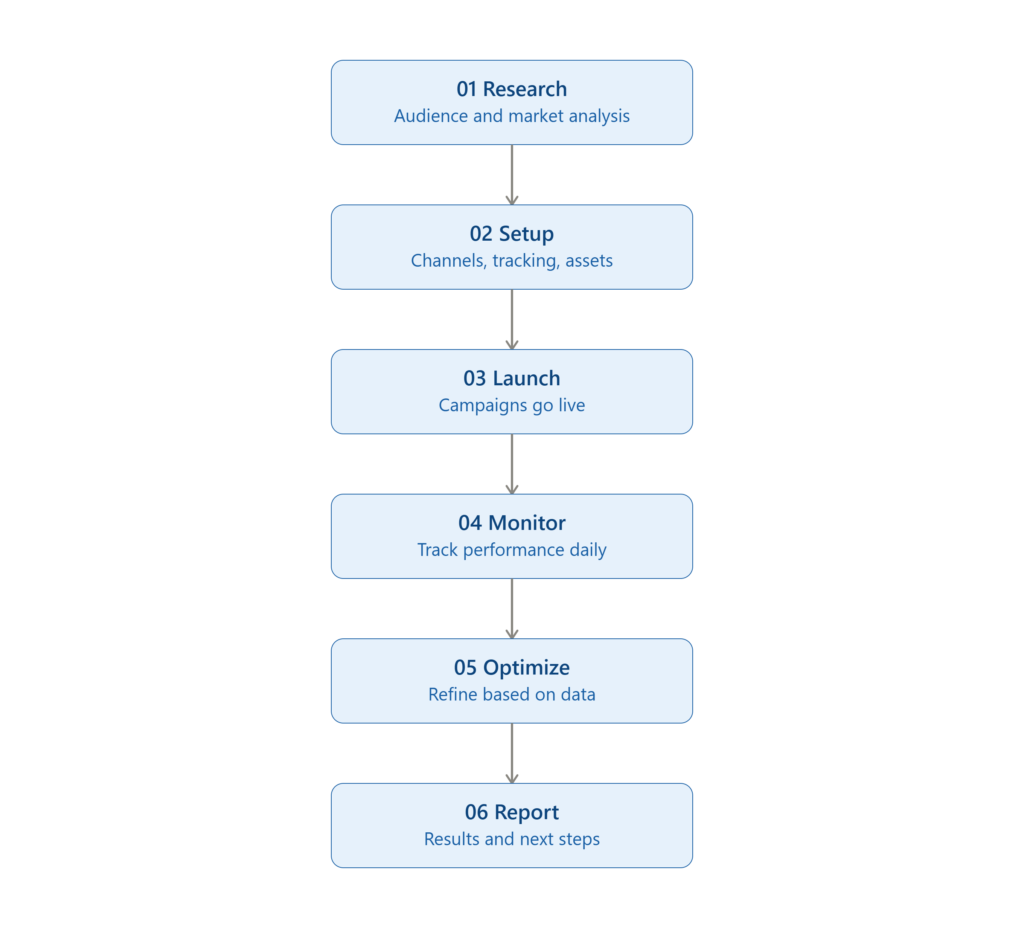
Step 1: Pre-Launch Setup and Infrastructure
Before any campaign goes live, the groundwork needs to be solid:
- Website readiness — ensuring landing pages are fast, mobile-optimized, and built to convert
- Tracking setup — installing Google Analytics, conversion tracking, and call tracking so every result is measurable
- Account structuring — organizing Google Ads accounts by campaign type, location, and objective
- Technical SEO audit — fixing crawl errors, broken links, and indexing issues before content push begins
Skipping this step is one of the most common reasons campaigns underperform, no matter how good the strategy behind them is.
Step 2: Implementing SEO Campaigns
SEO implementation is a phased process rather than a single action:
- Publishing optimized content based on keyword research
- Fixing on-page elements — title tags, meta descriptions, header structure, internal linking
- Improving site speed and Core Web Vitals
- Building quality backlinks through outreach and guest content
- Regularly auditing rankings and adjusting content based on performance
For Delhi-based clients, this also means weaving in location-relevant content and keywords that reflect how local customers actually search — an approach that blends naturally into Local SEO execution as well.
Step 3: Launching and Managing Google Ads Campaigns
Once the strategy defines target keywords and budgets, Google Ads implementation involves:
- Campaign creation across Search, Display, or Performance Max, depending on goals
- Ad group structuring around tightly themed keyword clusters
- Writing and testing ad copy that speaks directly to Delhi audiences’ needs and pain points
- Setting bid strategies aligned with budget and conversion goals
- Adding negative keywords to prevent irrelevant clicks and wasted spend
- Monitoring daily performance — click-through rates, cost-per-click, and conversion rates — and adjusting bids or targeting accordingly
This is where campaigns are made or broken. A campaign left unattended after launch rarely performs as well as one that’s actively managed and optimized week over week.
Step 4: Executing Local SEO for Delhi-Specific Visibility
For businesses targeting customers within Delhi, Local SEO implementation deserves special attention:
- Optimizing and regularly updating the Google Business Profile with accurate details, photos, and posts
- Ensuring NAP (Name, Address, Phone) consistency across directories like Justdial and Sulekha
- Building local citations and location-specific landing pages (e.g., for South Delhi, Dwarka, or Rohini)
- Actively managing customer reviews and responding promptly
- Creating locally-relevant content that addresses Delhi-specific customer needs
Implementing Local SEO properly ensures that when someone nearby searches for your service, your business shows up — not a competitor’s.
Step 5: Monitoring, Reporting, and Optimization
Implementation doesn’t end at launch. Ongoing management includes:
- Weekly or monthly performance reviews across SEO rankings, ad spend, and conversions
- A/B testing ad creatives, landing pages, and calls-to-action
- Budget reallocation toward the channels and campaigns delivering the best ROI
- Adjusting the broader digital marketing strategy based on real performance data, not assumptions
This feedback loop is what separates a campaign that’s “running” from one that’s actually growing your business.
Common Implementation Mistakes to Avoid
- Launching Google Ads campaigns without proper conversion tracking in place
- Publishing SEO content without keyword or competitor research
- Ignoring Local SEO while focusing only on broad national keywords
- Setting a campaign live and not reviewing performance for weeks
- Failing to align implementation with the original digital marketing strategy and business goals
Final Thoughts
A Digital Marketing Strategy is only as good as its implementation. For Delhi businesses navigating a crowded and competitive market, success comes from disciplined execution — properly configured SEO, carefully managed Google Ads campaigns, and consistent Local SEO efforts, all monitored and refined over time.
After campaigns go live, marketing performance tracking helps identify which channels, ads and landing pages are generating results.